
2026. aasta LWS Open at Idlewild jääb discgolfi kommuunile meelde tänu kolmanda ringi ajal rajal olnud marshalli otsusele, mis tõi Mauri Villmannile kaasa karistuse, mis omakorda mõjutas tema lõplikku asetust ning väljamakse summat.
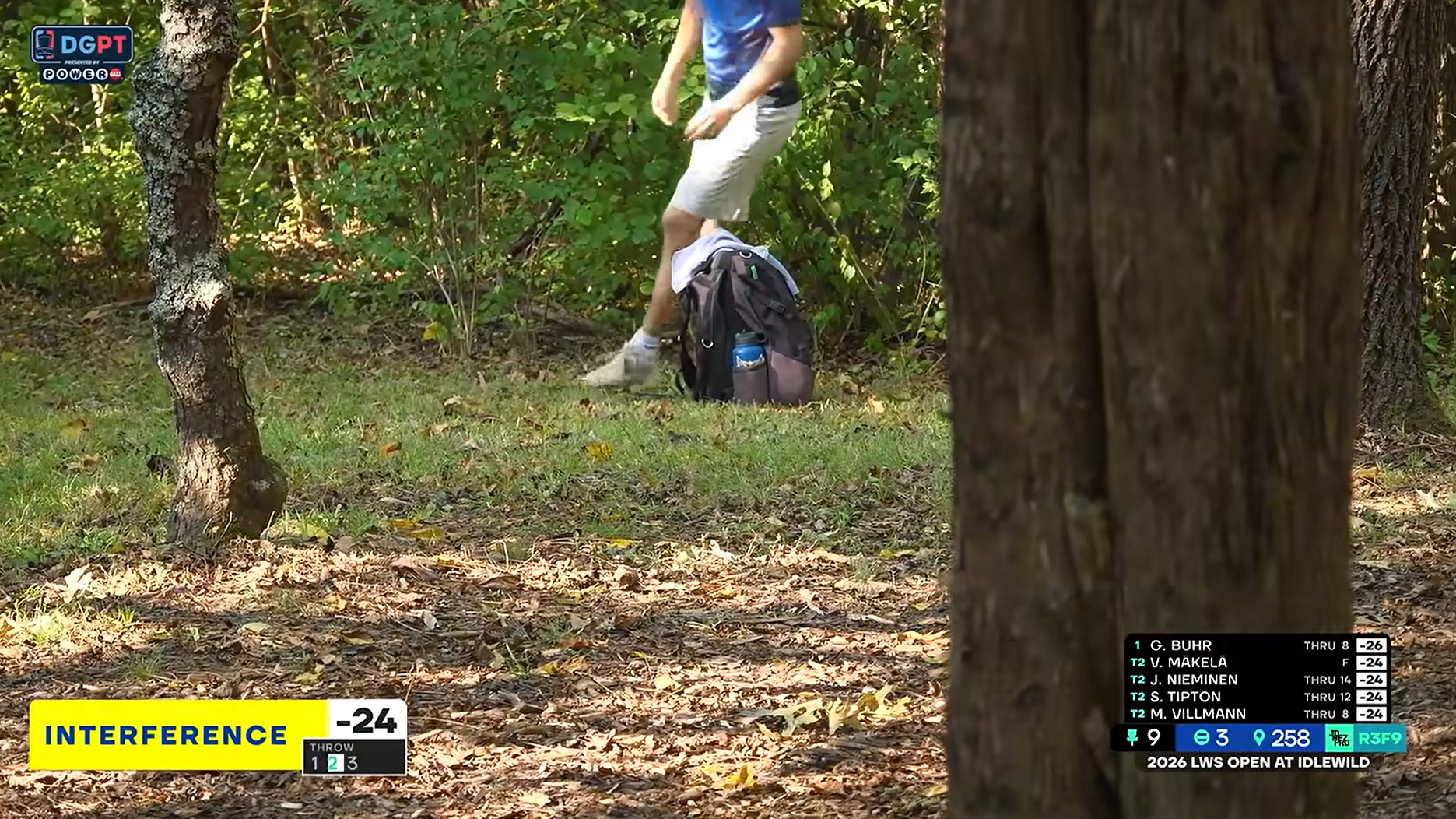
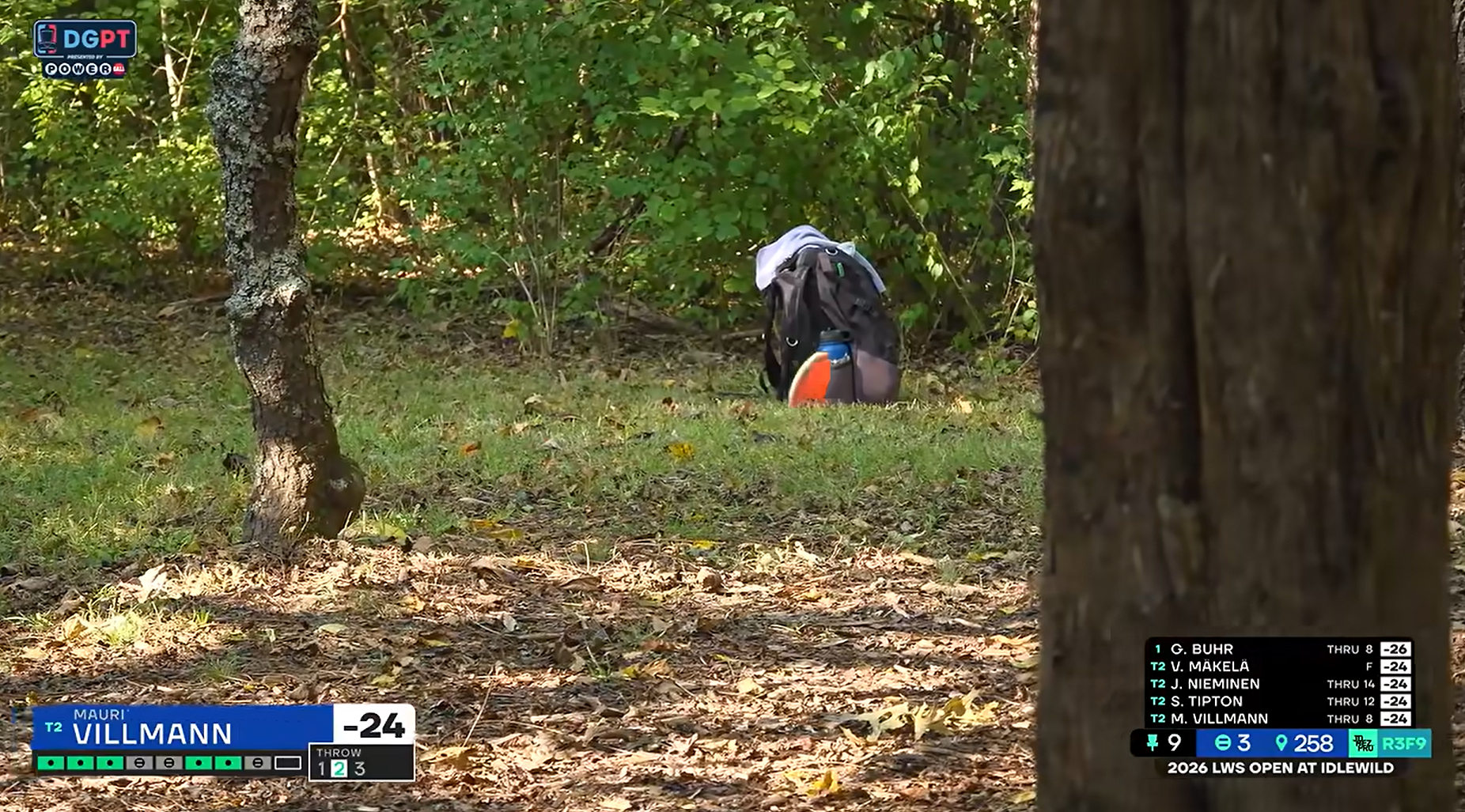
Mauri Villmannil juhtus võistluse kolmandal ringil, 9. rajal, olukord, kus puttimise järgselt veeres ketas vastu tema kotti. Reeglite järgi lisandub selle eest karistus +1 ning järgmine vise tuleb sooritada sealt, kus eelmine vise sooritati. Kohapealse segaduse järgselt otsustati kaasvõistlejate ja kohapealse marshalli koostöös, et järgmine vise peaks toimuma sealt, kus kotti tabanud ketas seisma jäi.
Järgides kohapealse kontrollorgani otsuseid, selgus ringi järgselt, et siiski oli mängu käik vale ning par3 rajal 4 või 5 asemel märgiti tulemustesse 6. See tähendas ühe raja pealt skoorile +3 lisa ning lõpptulemus muutus jagatud 5. koha pealt 11. kohale, mis mõjutas ka võistluse väljamakset ümmarguselt 1000$ ulatuses.
Kõnealust olukorda on võimalik vaadata YouTube keskkonnas JomezPro kanalil, koos kommentaaridega SIIN.
Olukord juhtus 9. rajal, seega ajaliselt videos alates 40:19.
Antud olukorraga seoses pidas Eesti Discgolfi Liit vajalikuks pöörduda PDGA reeglite komitee poole selgituste saamiseks. Jagame PDGA-le edastatud kirja täismahus.
Dear PDGA representatives,
We are writing on behalf of the Estonian Disc Golf Association regarding the ruling involving Estonian player Mauri Villmann at the 2026 LWS Open at Idlewild.
We are aware of the circumstances surrounding the ruling and would like to formally express our concern regarding the additional penalty throws assessed to Villmann after he followed the instruction given to him by an on-course official.
From our perspective, this raises serious questions about the authority of tournament officials and the responsibility placed on players when following an official ruling.
We would therefore appreciate an official clarification from the PDGA on the following:
How does the PDGA justify penalizing a player for following an instruction given by a tournament official?
What is a player expected to do if they believe an official ruling may be incorrect?
Does the PDGA consider the ruling and the resulting additional penalty throws to have been applied correctly in this case?
Will the decision and Villmann’s final result be reviewed?
We also believe it is important to acknowledge the very real consequences this ruling has had for the player. As a result of the additional penalty throws, Villmann has lost, among other things, prize money and tour points, and the change in his final placing may also affect his ability to qualify for the DGPT Playoffs. We find it extremely unfair that a player should face such consequences as a result of following an instruction given by an official.
As a national association, we need to be able to give our players clear guidance on how they are expected to act when receiving rulings from tournament officials.
We also want to make clear that we are not satisfied with how this situation was handled and expect a clear explanation from the PDGA.
Respectfully,
The Board of the Estonian Disc Golf Association
Tänaseks oleme saanud ka PDGA poolse vastuse, mida jagame samuti täismahus.
-
Can a player be penalized for following a Marshal’s instruction?
-
What can a player do if they suspect a Marshal’s instruction is incorrect?
-
Does the PDGA agree with the result?
-
Will this be reviewed by the PDGA?
-
Can the PDGA adjust the DGPT standings to account for this incident?
-
Is there anything further the Estonian NGB can do?
To begin, the facts of the situation are not in dispute: during the third round, on hole 9, Mauri Villmann threw his drive near the basket. His second throw hit the target’s tray, rolled away, and hit his bag. After discussion, Mauri played from where the disc came to rest, completing the hole.
“It is a violation if a player or their equipment interferes with the course of their own thrown disc,” ORDG 810.D. If this occurs, the correct outcome is that “the player continues play from the previous lie” counting both the throw itself and one penalty throw, Id. Here, a disc golf bag is equipment, and the bag was Mauri’s. The correct outcome was therefore for Mauri to play from the previous lie with a penalty (i.e., throwing 4).
Initially, Mauri was instructed by the Marshal on the card to do precisely that: to play from the previous lie. Two other members of the group disputed the ruling, arguing that Mauri should play where the disc came to rest. Despite the confusion, Mauri did not call a provisional. The group settled on having Mauri play where the disc came to rest, and the Marshal agreed. This was, by rule, an incorrect lie. Mauri then completed the hole and recorded a score of 4.
Because Mauri played from an incorrect lie, this constituted misplay under 811.F.1. Mauri continued to play after the misplayed throw, teeing off on hole 10, and so the proper penalty was two throws, 811.F (“If an additional throw has been made after the misplayed throw, the player continues play from their current lie and receives two penalty throws for the misplay”). Accordingly, Mauri was assessed a two-throw penalty for the misplay, for a score of 6 on hole 9. Mauri appealed the misplay penalty to the Tour Director under Competition Manual 4.12.B. The appeal was denied. This is consistent with how these rules have been applied at previous events.
(As a side note, this misplay was associated not with the throw that struck Mauri’s bag, but instead with the subsequent throw that took place from the incorrect lie and is therefore not a double penalty under 801.02.J. Further, “[a]ny penalty throws applicable to the throws used are assessed in addition to the penalties for the misplay,” 811.F.)
-
A player may appeal group decisions to an Official and an Official’s decision to the TD (801.03.A).
-
A player may make provisional throws under 809.02 as part of an appeal (801.03.B).
-
A player at an Elite Series event may appeal a TD’s decision to the Tour Director (4.12.C).
-
The Tour Director is the Chief Official in lieu of the Tournament Director (4.12.C and 1.12.F).
-
Rulings by the Tournament Director – or in this case, the Chief Official – are final (801.03.C).
-
Once the event is over, scores are final (808.G).
Let’s apply these rules to Mauri’s situation. Section 4 of the Competition Manual was in effect because was an Elite Series event, 4.01. The Marshal is a Tournament Official, 4.11.A. Mauri had the right to appeal the decision of the Marshal to the Tournament Director and the decision of the Tournament Director to the DGPT Tour Director, 4.12.C. However, Mauri did not appeal in the moment, only after the fact, and he did not make provisional throws as part of that appeal under 801.03.B. The failure to declare a provisional limited the options available on appeal.
We fully understand the effect on Mauri’s standings with the Disc Golf Pro Tour. However, those standings are not regulated or managed by the PDGA.
Eesti Discgolfi Liit hoiab jätkuvalt silma peal rahvusvahelistel võistlustel ning suhtleb aktiivselt PDGA kui rahvusvahelise discgolfi katusorganisatsiooniga, et tulevikus sarnaseid olukordi oleks minimaalselt ning, et meie mängijaid koheldaks õiglaselt ja professionaalselt.